23:41. Still working.
The real cost of selling trips over WhatsApp and from memory. What to keep from the chat, and what to stop carrying in your head.
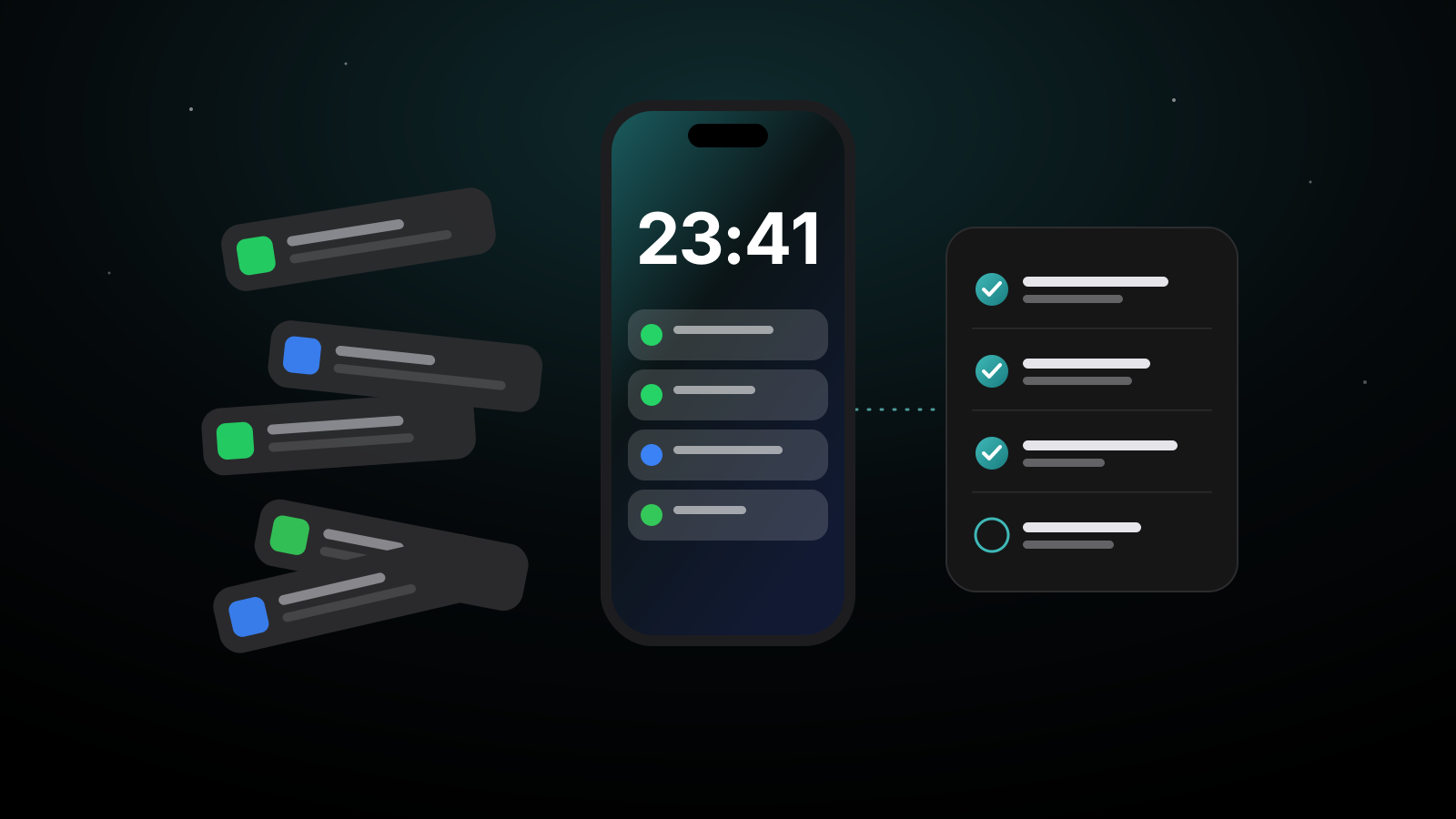
It’s Tuesday. It’s 23:41. You had dinner a while ago, or so you think, because your mom texted “coming for dinner?” and you never replied. The phone buzzes again.
Ana Gómez wants to know how much Patagonia costs for 2. The Ruiz family is asking whether you got their transfer, with two question marks. The hotel in El Calafate sends the fourth “RE:” in a thread about rates. You answer what you can from the couch and go to bed with three questions going around in your head.
Did I send Ana the quote? Did the Ruiz family pay the deposit? Where’s that PDF?
If this scene feels familiar, this is for you.
What WhatsApp does well
Let’s start by defending the accused. WhatsApp is probably the best sales tool your agency has. Your clients are already there every day, between the family group and the work group. They don’t have to download anything or remember a password. They write to you the way they’d write to a friend, and that’s exactly what you want. The trust built in a two-minute voice note is something no form will ever build.
It’s also fast. A photo of the glacier, a “does this date work?”, a yes with an emoji. Selling trips is a conversation, and WhatsApp is the best place there is to have one.
So the conclusion isn’t to drop WhatsApp. Your clients aren’t leaving it, and they shouldn’t have to.
What breaks
The problem isn’t the chat. It’s everything we ask the chat to do that it was never built for.
It has no shared memory. What Ana told you about the anniversary is on your phone. If you’re sick tomorrow, or your partner picks up the conversation, it starts from zero. Every conversation lives on the device of whoever had it, and the whole agency depends on that person remembering.
Quotes are loose files. You send a PDF. Ana asks to change the hotel. You send another. Then she asks about a cheaper option and that makes three. At some point she’s looking at version two while you’re talking about version four, and neither of you notices until the deposit arrives for the wrong amount.
Payments get reconciled by scrolling. “I sent you the receipt” might be in the chat, in an email or in a voice note. To find out whether the Ruiz family paid, you open your bank app, look for the amount, go back to the chat, look for the photo of the receipt. To know how much you’re owed this month in total, you’d have to do that for every client.
Follow-up depends on you remembering. A client who doesn’t answer a proposal doesn’t vanish all at once. They cool off slowly. If nobody writes to them after three days, by the end of the week they’ve booked somewhere else. Nothing in the chat warns you. What warns you is your own head, at 23:41, when it should be resting.
None of this costs you a sale in a way you can see. What it costs is harder to spot. It’s the inquiry that went unanswered and you never knew you lost. It’s the night spent going over who paid. It’s an agency that can’t grow beyond what fits in your memory.
What to keep and what to fix
Separating the two helps.
Keep the channel. Let your clients keep messaging you on WhatsApp, with their tone, their voice notes and their photos. That’s where trust is built and where they want to be.
Fix everything that comes after the message:
- Each conversation tied to its client and visible to your team, not only to the phone of whoever replied.
- One living proposal, instead of a pile of versioned PDFs.
- The payment recorded where the trip is, so “did they pay?” gets answered by looking, not searching.
- What’s pending in plain sight, so follow-up doesn’t depend on your memory.
Notice that none of these fixes asks anything new of your client. The whole change happens on the agency’s side.
How Vuela handles it
Vuela starts from that same split. Your clients keep messaging on WhatsApp. You stop losing them there. Messages land in a shared inbox, each one tied to its client, and every inquiry becomes an opportunity you see on a board next to the others. The proposal goes out on one link with your brand, where the traveler chooses and pays online with Stripe or Mercado Pago, and the payment records itself.
The idea is that at 23:41 the phone can wait until tomorrow, because tomorrow you’ll know exactly where everything stands. If you want to try it, it’s 14 days free and no card, from the pricing page.